It was never reluctance: What ASCO 2026 revealed about clinical trial recruitment
Ask why so few people living with cancer join clinical trials and you will often hear the same answer. They are wary. They don't want to be experimented on. They don't trust the process. They'd rather not risk a placebo.
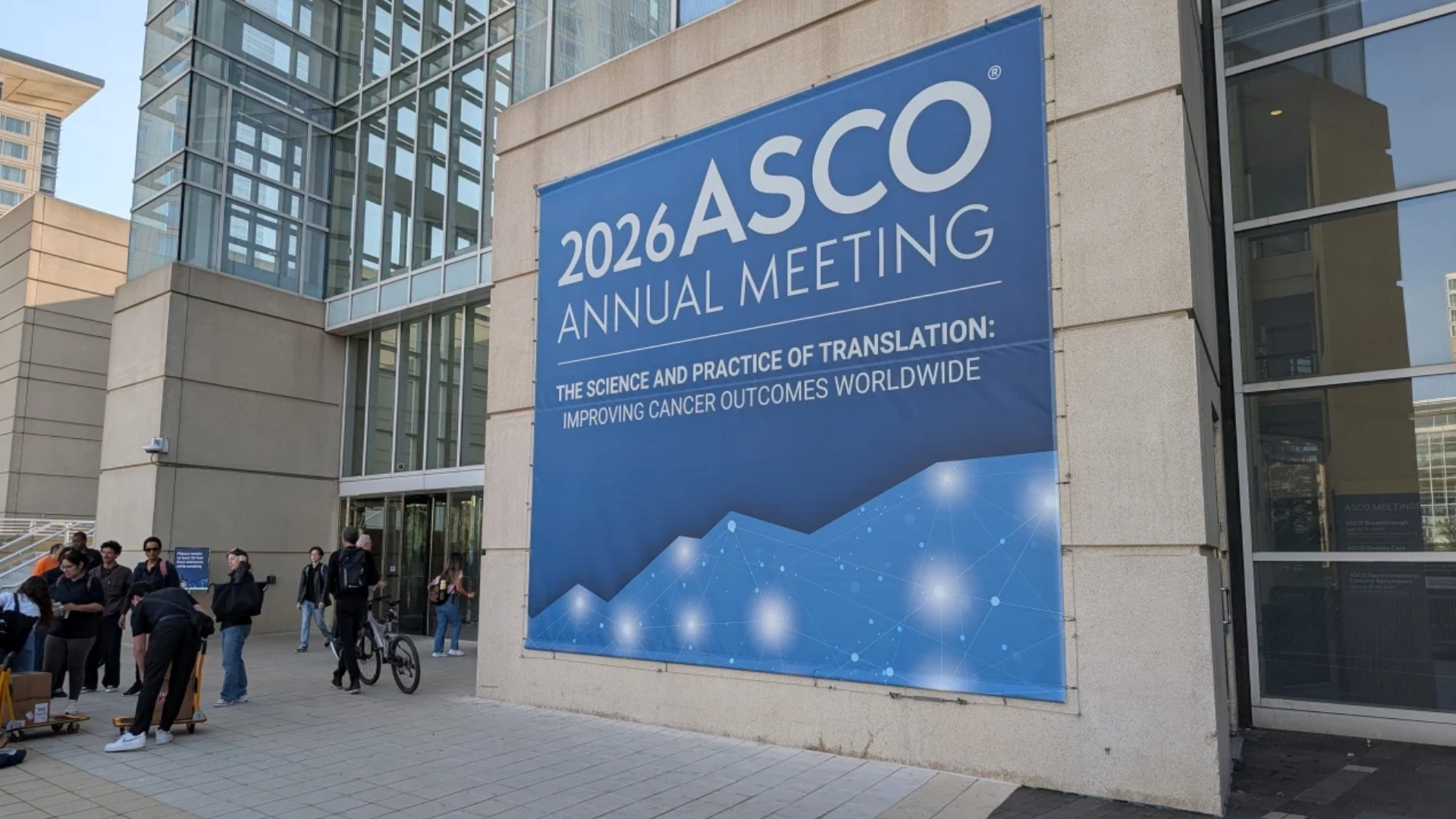
Yet, the data from this year's ASCO Annual Meeting in Chicago tells a more nuanced, and ultimately more hopeful, story. Reluctance isn’t the bottleneck – more than three quarters of people are open to the conversation before it has even started.1
So if patients are willing, where do the opportunities lie?
The awareness gap is an opportunity we can close
Start with the most fundamental barrier: knowing that trials exist. Many patients are not choosing to stay away; they simply haven't been reached yet.2 This tells us that outreach and education can make an enormous difference. For most people outside major academic centres, clinical trials remain off the map, and that is a gap the industry is well placed to close.
The gap in clinical trial participation is driven not only by practical access challenges, but also by assumptions and perceptions that can influence whether eligible patients are informed about available opportunities.1 Raising awareness of this dynamic opens up a valuable conversation about how we can support clinical teams to have those discussions with confidence.
Why recruitment gaps are communication gaps
Patients are increasingly seeking cancer information from AI and other digital sources beyond traditional healthcare channels. Yet patient-facing webpages about AI in cancer care often fall short: only a third met high-quality criteria, just 15% mentioned hallucination or misinformation risks, and reading levels were well above recommended standards.3 At the same time, emerging evidence suggests large language models can provide more readable, higher-quality information than some established cancer resources, although they may lack detail.4
The opportunity is not to compete with AI, but to help ensure AI-enabled patient information is both accurate and complete. There is real room for our field to raise the bar here.
Format is no longer a footnote
Getting the content right is only half the challenge – format determines whether patients actually engage with it. One study found a mobile app was used significantly more often than an equivalent printed resource (64% versus 41%),5 while another showed patient videos reaching 72.4 million views compared with 1.8 million website visits.6
The lesson for communicators is simple: meet patients where they are, in formats they already choose, rather than expecting them to adapt to ours.
Education can do more than inform
Reaching patients is one thing; helping them act on what they learn is another. A multilingual, multimedia education programme for people living with myeloproliferative neoplasms demonstrated measurable gains in patient activation: all participants reported increased confidence to speak up about their care, and 95.7% felt better able to take an active role in treatment decisions.7
That matters because the goal is not simply to deliver information, but to help patients ask questions, weigh options, and engage with their care teams from a position of confidence. For communicators, the opportunity is to move beyond awareness and design content that actively enables patients to participate in decisions about their care.
The variable worth screening for
Digital engagement emerged as a powerful enabler of equitable care, but only when patients are supported to participate. One study found that a single question about finding helpful online health resources identified low digital health literacy with 96.9% accuracy, offering a simple way to identify patients who may need additional support.8 Another showed that among digitally engaged patients with myeloma, traditional disparities in access to novel therapies were substantially reduced, although some gaps remained.9 Research into digital care tools reinforced the same principle: wearables showed promise for earlier detection of complications,10 but high uptake of remote monitoring did not always translate into meaningful clinical action.11
The communications implication is clear. Digital tools work best when they are understandable, usable, and designed around real patient and clinical workflows. Technology without usable communication design generates noise, not value.
What we take from Chicago
ASCO 2026 adds meaningful weight to a view medical communications has long championed: participation, engagement, and equity in cancer care are, at root, communication challenges, and our discipline is well positioned to help solve them.
The opportunity is clear. Patients are willing to engage. What makes the difference is awareness, readability, format, digital access, and the ability to move people from information to action. These are all areas where thoughtful communication work directly moves the needle. Plain-language, multi-format, equity-aware patient communication is not simply best practice; it is an evidence-backed contributor to recruitment, engagement, and more equitable care.
The data confirm that the way we communicate shapes who participates, who benefits, and how equitably care reaches those who need it most.
References
- Yagnik R, et al. J Clin Oncol. 2026;44(suppl 16):abstr 11092. Available here. Accessed: June 2026
- Okado I, et al. J Clin Oncol. 2026;44(suppl 16):abstr TPS1676. Available here. Accessed: June 2026
- Subramanian P, et al. J Clin Oncol. 2026;44(suppl 16):abstr 9000. Available here. Accessed: June 2026
- Liu S, et al. J Clin Oncol. 2026;44(suppl 16):abstr 9019. Available here. Accessed: June 2026
- Sampathkumar Y, et al. J Clin Oncol. 2026;44(suppl 16):abstr 11060. Available here. Accessed: June 2026
- Liu S, et al. J Clin Oncol. 2026;44(suppl 16):abstr 9044. Available here. Accessed: June 2026
- Diallo AM, et al. J Clin Oncol. 2026;44(suppl 16):abstr 6577. Available here. Accesed: June 2026
- Gunning TS, et al. J Clin Oncol. 2026;44(suppl 16):abstr 1634. Available here. Accessed: June 2026
- Hydren JR, et al. J Clin Oncol. 2026;44(suppl 16):abstr 11189. Available here. Accessed: June 2026
- Paludo J, et al. J Clin Oncol. 2026;44(suppl 16):abstr 1633. Available here. Accessed: June 2026
- Girard N, et al. J Clin Oncol. 2026;44(suppl 16):abstr 11107. Available here. Accessed: June 2026
All abstracts © 2026 American Society of Clinical Oncology, presented at the ASCO Annual Meeting 2026.